
Social media is shaping the world we live in. Most importantly, it is changing what we define as beautiful. It is giving us unrealistic expectations that we try to live up to almost everyday.
Boomers vs Millennials
Before social media, life was completely different compared to the life of a millennial. While boomers read the newspaper, millennials scroll through their phones. While boomers took pictures with Polaroids and disposable cameras, millennials use the camera on their phones. While one generation puts their pictures in a scrapbook that only a few friends and family will see, another posts them to social media and shows the world.
While being a millennial does not mean we do not go outside or hang out with friends like they did in the 1960s, it also doesn’t mean that we aren’t attached to our phones. A recent study done by Common Sense Media said that teens spend as much as nine hours per day on social media. That’s 63 hours a week, 270 hours a month, and 3,285 hours a year. In one year, a teen who spends nine hours per day on social media, is on social media for the equivalent of 137 days out of the year. That is 137 days of “living” in a world that can not exist in reality.
Social media apps, like Instagram and Snapchat, have altered the way we view our lives. We can all agree that social media is our highlight reel. However, it also shows the retouched, filtered, edited, and facetuned versions of people. Adding a filter or editing your pictures isn’t always a bad thing, but when it starts to affect how we view our own bodies, that is when it can become harmful.
Social Media Version of Us
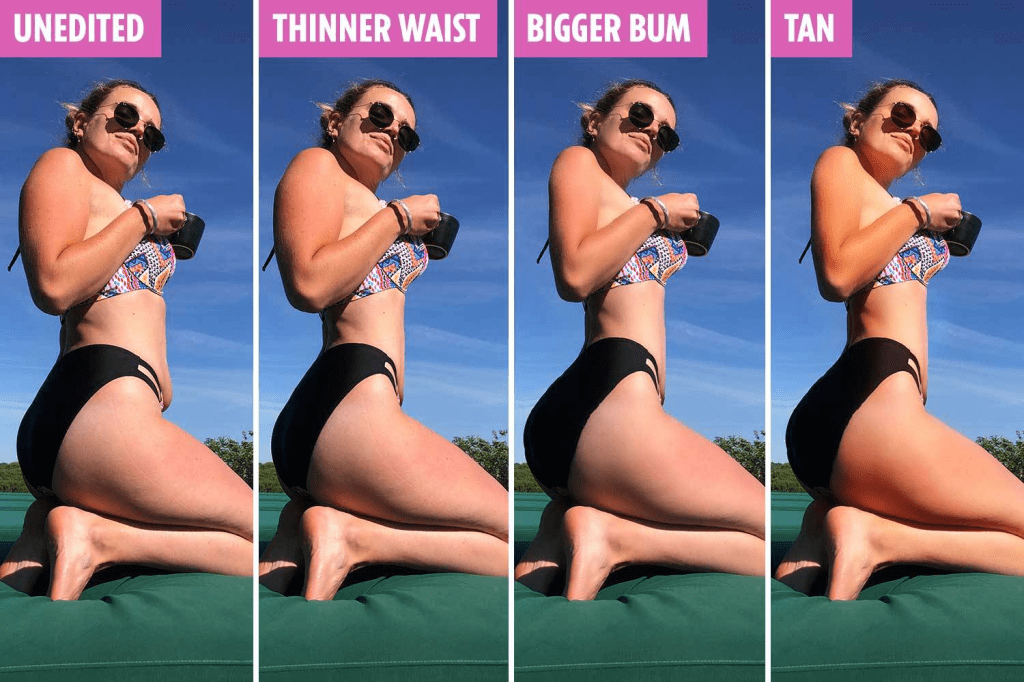
On social media, we strive for the perfect version of ourselves. Sometimes, that perfect version of ourselves is created through editing apps like Photoshop and Facetune.
Adobe photoshop was created in 1988 but released in 1990. Then, experts and professionals would spend hours editing photos for things like magazines. Now, we are able to download the app within seconds and start editing our own photos so we can post them to instagram later.
Facetune is another popular editing app. Facetune was created in March of 2013. In 2017, it was Apple’s most popular paid app. I think that this speaks volumes for our generation.
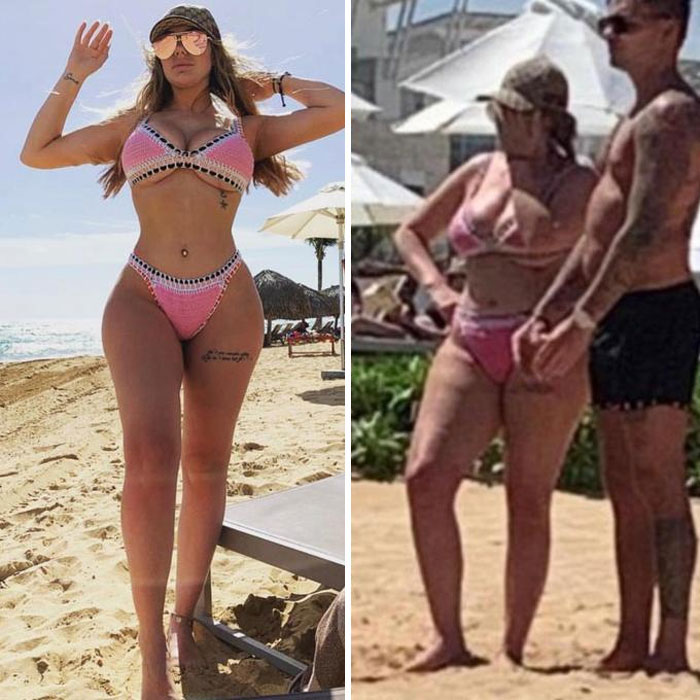
The problem with this is that we are able to alter our bodies and transform ourselves into almost new people. We can do things like smooth our skin, get rid of our stretch marks or cellulite, and make ourselves “skinnier” or more muscular. We can also change our face by changing our nose shape or jawline. When all of these changes are all done together in one photo, that is when editing your photos for Instagram can become toxic.
This can subconsciously tell us that we are not good enough based on how our bodies look. This can affect people’s self-esteem. It can also make it harder for us to accept what we don’t like about ourselves. We create unrealistic expectations that we can not obtain and this is what can become the most harmful part in my opinion.
Apps like Instagram, are apps that reinforce validation. The amount of likes on photos has all affected us at one point in time. Remember the time when people would post “ DM for a rate?”
How about asking a friend or a friend asking you, “ Which one should I post for Instagram?” or “Is this photo good enough to post?” Instagram has become an app based on looks. We don’t only judge our own looks on social media either, we can look at other people and judge them based on how we think people should look on social media.
Have you been affected by Social Media apps? Let’s get personal!
Think to yourself if social media has ever negatively affected you. Have any of your social media apps affected the way you view yourself/ your body or others’ bodies?
For me, I can say that instagram has affected how I view myself.
Over winter break, I realized that I was following social media influencers, not because I knew them or liked them, but because I aspired to have a similar body type. I realized how toxic Instagram became for me and I was talking myself down. I became really unhappy with myself. I knew this wasn’t a healthy relationship between me and my body.
Tips when your body image becomes affected by social media apps.
When I realized how toxic instagram became for me, I went through my followers list and unfollowed people whose bodies I admired and wanted. I unfollowed almost 300 people. This small step changed everything for me because I was no longer seeing images that made me view myself in a negative way.
I also remember the first and last time where I smoothed my skin to hide blemishes. I only put filters on my photos so when I did this, I felt bad about myself and felt like I wasn’t allowing myself to be human. I felt like I was being mean to myself. I later took the photo down because of this. My tip is to notice how editing your photos makes you feel about yourself.
My last tip is to practice self-love. For everybody, this can be different. For me, self-love consisted of:
- Face masks
- Self affirmations
- Stopped comparing myself
- Yoga and meditation
- Being grateful for my body. I realized how amazing and powerful our bodies are and I thank my body for things like self-healing or my feet, which help me get to my favorite places!
Author: Kaitlyn Sabanofsky
 Body Image Through Media
One reply on “Expectations vs Reality: Social Media and Body Image.”
Hi Kaitlyn,
I agree that social media as a whole can be damaging to our self esteem and body image. Like you mentioned, social media platforms can further unrealistic body standards that many feel the need to live up to. This is partly because of the easy accessibility of apps like Facetune or Adobe photoshop that people can download and edit their photos with. Popular influencers like James Charles reflect this trend as they frequently praise editing apps and well as say that they use them quite often to modify their content. There are numerous problems with this though that negatively impact regular users. People start to think that the edited version of both themselves and others are normal and feel pressure to achieve that. However perfectly edited people without acne or wrinkles or cellulite is not possible and should not be seen as so. Additionally, with an influencer jumping onto the trend and publicly commending it, people can be mislead that edited and filtered images are the norm and are a must for a photo to look good. This is especially true for the younger generations who are more susceptible to these harmful messages. Unfortunately in a place where aesthetics is king and people are judged for their looks, it can be difficult to feel comfortable with the way we look normally. I’m totally subject to this in my own experience with social media. There are times where I compare myself to other people and have a hard time feeling comfortable with my body. I would be lying if I said that social media doesn’t stress me out sometimes and that I don’t feel the need to blur my imperfections. Only this year have I started to finally reflect on my social media usage and how it makes me feel as a whole. I have started to unfollow accounts that make me feel bad about myself and well as find cut down on my social media usage. It’s only a start, but I already feel better when I do go on platforms like Instagram and scroll through my feed. I really enjoyed reading this post and related to a lot that was brought up. Thanks for writing this, it is especially relevant in today’s day and age where so many people use social media everyday.
-Kady McGill
LikeLike