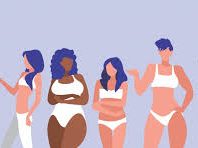
In today’s trending hits, you can say it is common to hear and see the objectification of women. When looking at music videos, there is an idolization and preference of a certain type of body which is showcased. Not only are these images engraved in us, they are also demonstrating that these desirable bodies are meant to pleasure the male artist which is usually the main focus in the video. In many situations women are used as background “objects” to bring attention to the video.

Do we really want it?
When speaking about this topic, there is a specific song that comes to mind. The song “Blurred Lines” by Robin Thicke is a song that I seemed to always catch my fourteen year old self singing over and over again. That is why when in my class, “Intro to gender, race, and sexuality”, when they showed the video I was shocked. When watching the video, all I seen were topless women walking around powerful men and being used as sexual objects. The lyrics of the song say “ tried to domesticate you, but you’re an animal, baby it’s in your nature”. They literally refer to women as animals and try to say that being a sexual object is “in our nature” as though that is are sole purpose. These artists Robin Thicke, T.I. and Pharrell Williams continue to repeat throughout the song “I know you want it”, as it is the main hook of the song. They repeat this to the woman to justify their objectification of women by saying that women are “always asking” to be sexualized. There is nothing wrong with woman being sexual as a feminist that is something that we do not shame, since there are also pressure of woman having to be “pure” and abstinent until marriage. Although in this song we see that not only are they objectifying women and saying that we asked to be sexualized. It also demonstrates something else which is important to point out in music videos which is inclusivity. Although this video may not be the best to showcase inclusivity, we see that there are only white, skinny women with the exception of the one light skinned black woman. These visuals are demonstrating beauty standards of what powerful men in pop culture such as Robin Thicke, T.I. and Pharrell Williams find attractive. Overall, this song and video are a perfect demonstration on how digital media tends to portray women.

The Video Vixen
I do not think this comes as a surprise, as it is common to see half-dressed women in the background of music videos. This can be demonstrated in this screenshot from the music video of the rapper Nelly, we see that the “video vixen” is almost fully naked and there are many other half dressed women in the back. We see that many of the women in these videos are also very curvy and have society’s “ideal body” which includes being skinny, with large breasts and big butts. It is rare to see women who are considered “plus-size” in music videos. This also spreads fat phobia as many artists are promoting the image of women with unrealistic bodies. It demonstrates that women who are shaped this way are more desired by men, although, in reality, many women are not shaped that way. We also see that the women in these music videos are very passive in the way that they allow all of the men to touch them and they are just in the video to “look pretty”. It is interesting to see the contrast, as looking at this screenshot of the music video, you see that Nelly is fully clothed. This demonstrates many of these women being objectified as they are just in the video to make the video more appealing to others.
Findings…
When analyzing some of these artists, I became aware of how a lot of our generation is listening to music which idolizes and promotes the degradation of women. One of the most prominent trends which appear in rap culture is women’s bodies and how they are sexualized and policed by men. When looking at music videos, too many of the trending songs, the idolizing and preference of unrealistic women’s bodies is demonstrated. Media such as these music videos go to promote the idolization of thin but curvy bodies which are in many cases unrealistic. These western influences create fat phobia and lead to being one of the causes of eating disorders. I come to realize that instead of promoting these videos and artists, we should promote artists and music which embraces and promotes feminism.
Author: Katherine Cardona
 Body Image Through Media
One reply on “Body image in Music Videos”
Emily Bajek, Katie Sun, Sanjna Sadarangani
Both of the music videos are good examples in showing how women are constantly portrayed in music videos. I had to analyze the “Blurred Lines” music video for one of my other classes, and it was shocking to see how much the women were objectified and the way that the men were interacting with them. The lyrics are honestly disgusting in the way that they make women out to be animals or sexual objects that are “asking for it.” I am glad that people criticized the song and music video when they first came out and also brought attention to how they promote rape culture. People definitely need to pay attention to the songs they listen to so that we do not promote songs like these.
It is sad to see how women are sexualized and objectified in the music industry. I’m glad this blog addressed the inhuman aspects of the industry, because it is simply wrong to think portraying women this way is acceptable. The fact that millions of people are listening to this song, and believing it is normal to refer to women as “animals” and “objects” just because Robin Thicke or Pharell Williams can, is sickening. Music is supposed to spread awareness, love, acceptance, equality, and creativity among people, yet we are spreading misogyny, mistreatment, and dominant ideologies of patriarchy. Not only are these videos promoting male dominant characteristics, but also unrealistic and inhuman aspects of a woman’s body. Young girls watching such a video will think she must look a certain way to be attractive or to get a male’s attention. Videos like this must be completely demolished, and those who partake in such an activity should face serious consequences.
The digital aspect of the song is just as bad as the lyrics of the song. As mentioned in this post, the music videos for these songs show the women wearing very little clothing. This, coupled with the lyrics that sexualize and degrade the women just reiterates and perpetuates the harmful idea that women are no more than sexual objects that exist solely for the pleasure of men. Especially since, like you said, the men in the music videos are fully clothed. They aren’t there for the pleasure of the females, but they treat the women like they are there to “look pretty”.
LikeLike