Pressures Athletes Face With Their Bodies
Many people may assume that athletes do not face body image issues as much as others might. Some may not think twice about the correlation between athletes and body image because they have “fit” bodies. However, many athletes push themselves to be able to perform their best but also look the best they can. There are many pressures that athletes face when it comes to their bodies and weight. Research has shown that athletes are at an increased risk for developing eating disorders.
A study was conducted that looked at female NCAA Division I athletes in basketball, softball, track and cross country, volleyball, soccer, swimming and diving, tennis and ice hockey. This study found that 49.2 percent of Division I athletes met the criteria for an eating disorder.
Body image issues are usually associated with women but male athletes face a lot of the same issues too. Muscle Dysmorphia, which most people have never heard of, is a type of Body Dysmorphic Disorder. According to the Body Dysmorphic Disorder Foundation, “It is popularly known as “Reverse anorexia” or “Bigorexia” by the media. It consists of a preoccupation with not being sufficiently muscular or lean (when this is not the case). Sports wrestling & body building gyms are a breeding ground for muscle dysmorphic disorder.” This is something that a lot of men face. One of the characteristics of this disorder is steroid abuse and often other substance misuse.
In sports, there is pressure to look a certain way. Sometimes, athletes feel this pressure not only from the media and society, but from their very own coaches and teammates. Sometimes coaches will put their athletes on controlled diets. Some are even shamed for how their bodies look by their teammates or coaches.
Katelyn Ohashi, former UCLA gymnast talked about the challenges she has had to face being a gymnast. In the interview Katelyn said that people would say, “it looked like I swallowed an elephant or a pig.” She also said that she and her teammates would make games like seeing who could eat the least amount of calories. 500 calories maximum. She also stated, “ We’d go in and measure our legs and then stop eating if we couldn’t get it around.”
Erin Rubenking, Associate Director/ Clinical Care Coordinator for the University of Colorado Athletic Department’s Psychological Health and Performance program, talked about athletes’ relationship with their bodies. “There’s a lot of pressure in general with athletes on their bodies. There is so much focus on what they are eating and what their fitness level is that they are hyper vigilant about their bodies.”
Athletes and The Media
Media plays a big role in how athletes are perceived. The media also affects an athlete’s understanding of their own bodies, especially for women.
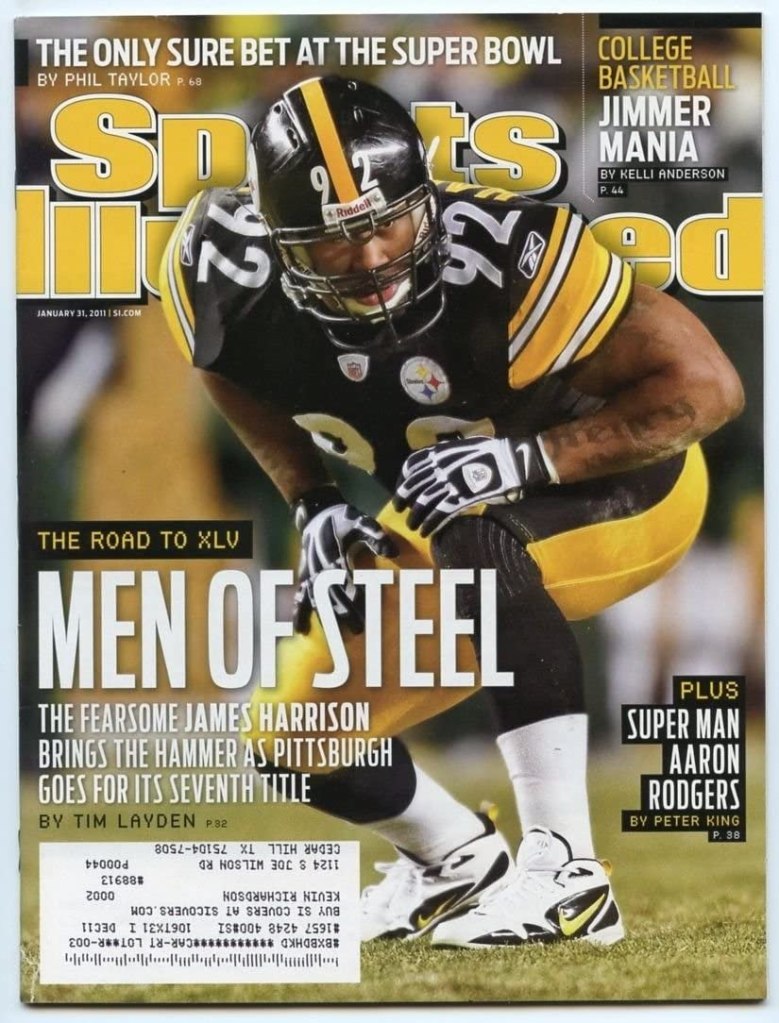

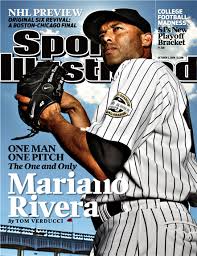
Sports magazines sexualize the female body. If you type Sports Illustrated and click images, it’s all women in bikinis. For women, the Swimsuit Issue is the first to pop up showing models and not athletes. You have to type Sports Illustrated Men in order to see covers done by males. However, there is a huge difference when you type these into google. The women are made to look sexy or beautiful yet the men look aggressive and focused on their sport.
Ben Wasike, a professor at University of Texas Rio Grande Valley, examined every cover from Sports Illustrated and ESPN The Magazine all the way through 2016. He was able to analyze the difference between how men and women are represented in these magazines, specifically, how they are photographed.
Some of his findings include women showing more skin than men and women being in “suggestive poses.” His research also shows 61% of female athletes compared to 28% of male athletes were smiling in their photos. “Men were more likely to be depicted with facial expressions that could be read as having serious intent, such as a determination to win.”
This information is important to realize because it also affects how athletes view their bodies. Women are showing their bodies and like their bodies are the only thing that they are good for. Not only does this affect athletes, but it affects women overall who are seeing these images. For male athletes, they are tough and muscular making it seem like you need to look this way as an athlete. It also leaves a message of this is what masculinity looks like by only showing more muscular athletes.
Gendered Athletic Wear
Athletic wear also affects the way athletes view their bodies. Females tend to wear less clothes, even from the time girls start doing sports like dance. Rain Dove is a gender-nonconforming model who wears both male and female clothing.
Photo Series Explores ‘Sexploitation’ in Athletic Uniforms
In this article, Rain Dove wears both athletic wear that is designed for men and women. This article is important to read because Rain Dove points out the differences in clothing based on your gender and sport you play. “Women’s athletic wear is usually tight-fitting [and] shows off those nice curves. It’s a lot of skin exposure. But men’s wear is a lot looser,” Rain said.
These are all important aspects to look at when it comes to body image surrounding athletes. They are surrounded by the pressure to have a fit and athletic body. It is sad to see what society and media puts you through no matter what category or group you fit into in society.
Author: Kaitlyn
 Body Image Through Media