Everyday people already struggle to meet the standards of beauty that we set for ourselves long ago—standards that we’ve talked about in our previous blog posts. For the 26% of Americans who are living with some form of disability, the act of feeling beautiful can seem even more out of reach. For them, it can be difficult to be accepted, let alone celebrated by those around you. In this post, we’ll talk about how people with disabilities are disenfranchised by our current concept of beauty, and how the media has both helped and hurt them.
Visible vs. Invisible
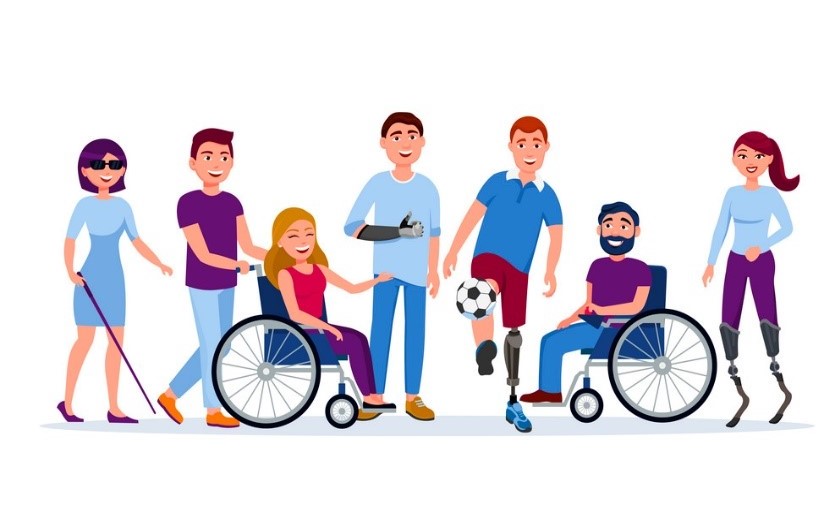
Before we talk about the relationship between beauty and disability, we should first establish what it means to be disabled. According to Merriam-Webster, a disability is “a physical, mental, cognitive, or developmental condition that impairs, interferes with, or limits a person’s ability to engage in certain tasks or actions or participate in typical daily activities and interactions”. Many of us know someone who is disabled or may have a disability ourselves.
Disabilities also come in numerous forms, both visible and invisible. For example, someone who is in a wheelchair is visibly disabled. However, someone who has a chronic disease or mental disorder is invisibly disabled. For the purpose of this blog post, I will mostly focus on how society views people with visible disabilities. However, it is important to note that those with invisible disabilities deserve to feel beautiful and included too.
Beauty as an Ableist Concept
Ableism is discrimination in favor of able-bodied people. Considering this, beauty can certainly be described as an ableist concept. Or at least our current definition of beauty. Let me give you an example: if our ideal is light, unblemished skin, tall stature, defined muscles, minimal body fat, and hair in all the right places, it’s safe to say that people with certain visible disabilities are not included in this.
For instance, a man in a wheelchair could be seen as weak and unattractive, but this is because we have trained ourselves to think “attractive” men have to be tall, athletic, and muscular. The same is true for a woman in a wheelchair; she could be seen as less physically appealing because her body doesn’t resemble the Barbies we grew up with. But beauty is abstract, right? There are no hard-and-fast rules to what you find beautiful, and everyone reserves the right to feel good about themselves. If we want to enforce this idea, we can start by first changing the way disabled people are represented in the media.
Disabilities in Media
The representation of disabled people in the media has only recently become a topic of concern. There have been great improvements as well as setbacks in the movement, but this is what inspired me to choose this topic.
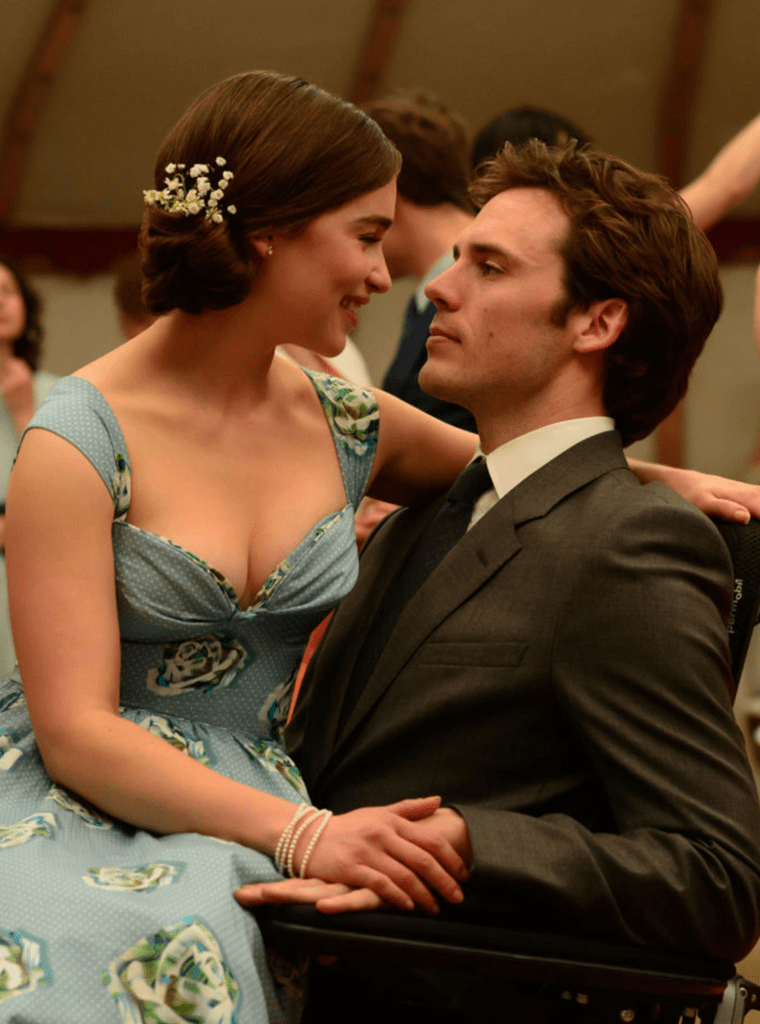
I had seen the movie “Me Before You” (2016) and thought it was a positive representation of people with paralysis. In the film, wheelchair-user Will wins the affections of his able-bodied caretaker Lou. Before meeting Lou, Will was bitter and resentful about being disabled. Falling in love made life worth living. On the surface, this message seems sweet and even romantic, but it also implies that disabled people can’t lead happy, fulfilled lives on their own. This is not true; everyone deserved feel attractive without having to receive validation from a romantic partner.
The actor who played Will (Sam Claflin) also happens to be able-bodied in real life. This seems to be a trend in Hollywood: disabled people being portrayed by able-bodied people. If disabled characters were played by actors who can actually have the disability, however, the performance would be probably richer, not to mention the fact that this would provide disabled actors with more work opportunities.
One example of representation of people with visible disabilities is the movie “Wonder” (2017). The main character is Auggie, a boy with Treacher Collins syndrome who has been home-schooled his whole life. Upon starting fifth grade, his parents enroll him in a private school for the first time. He experiences anxiety due to harassment and bullying, but he is supported and encouraged by his family, and eventually he is accepted by his peers. Again, the message seems authentic. However, Auggie is portrayed by an able-bodied boy with prosthetics, and he is only accepted by his peers when he saves them from bullies. This suggests that people with disabilities are only valuable when they are useful to others.
How to Be Inclusive
Movies like the ones I mentioned are good attempts at positive representation, but they are not good enough. Luckily, as time passes, more companies begin to make their own attempts at representing the disabled.
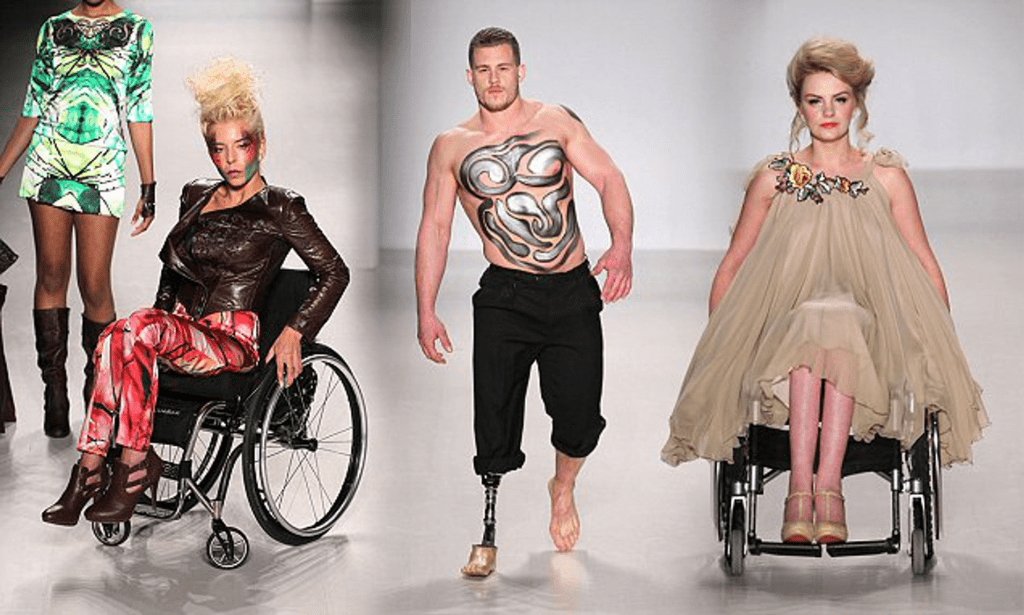
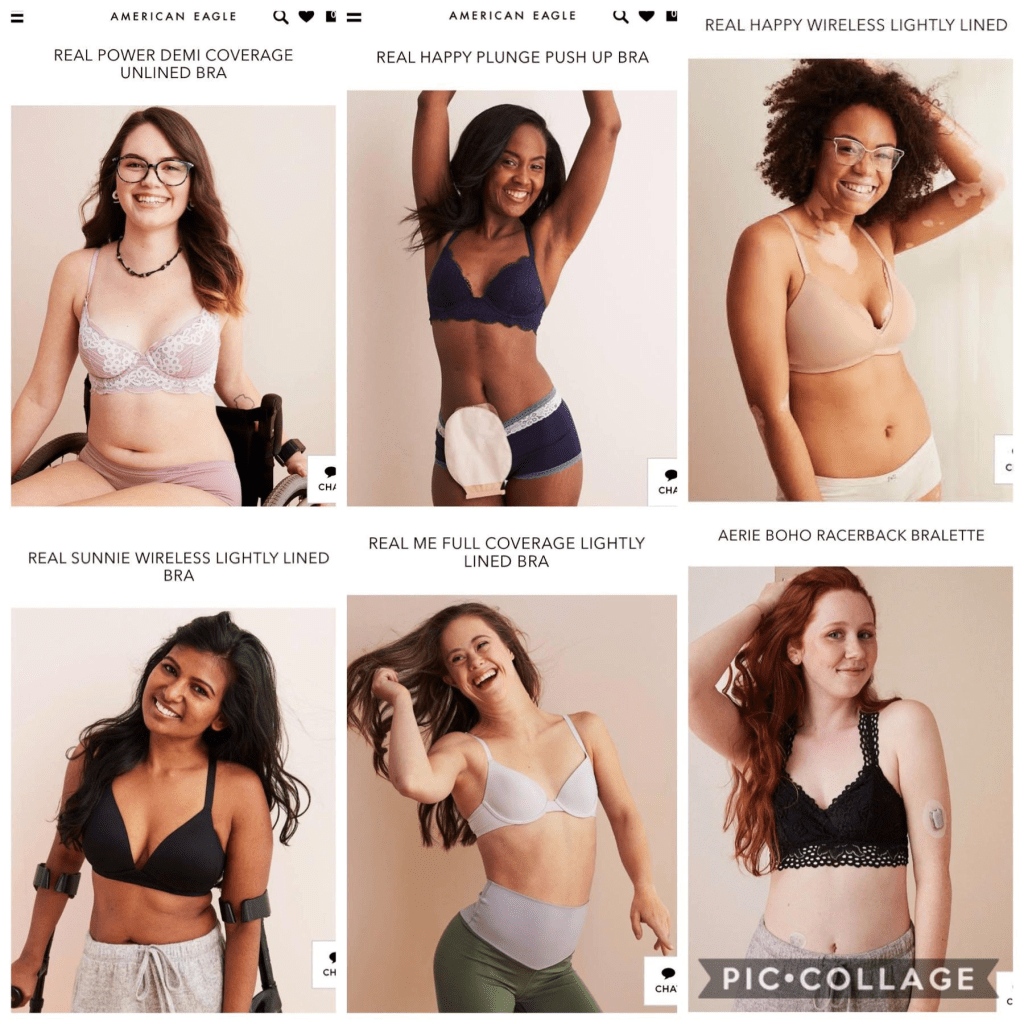
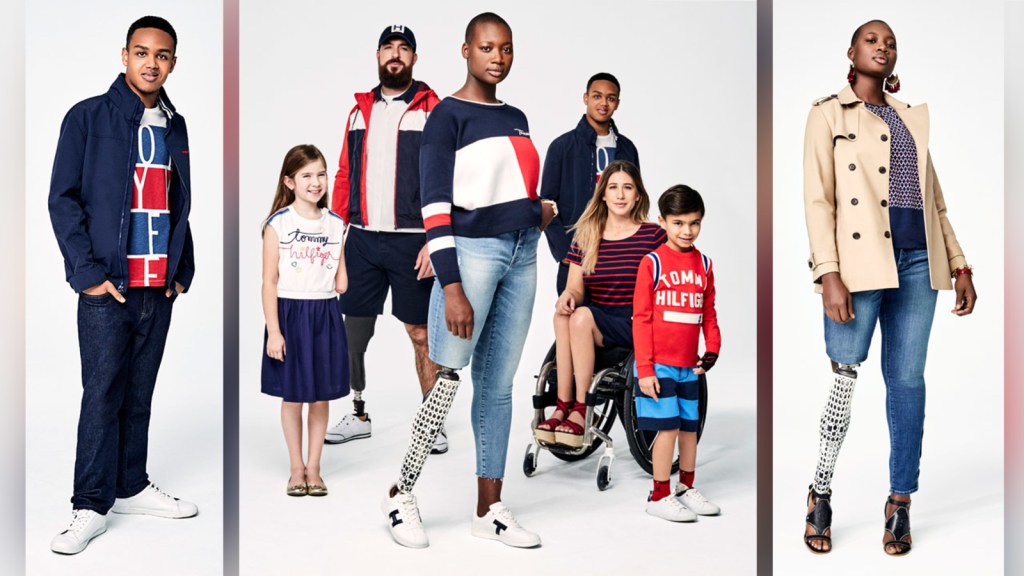
In the images above, fashion companies employed real disabled people in their campaigns for representation. This shows an actual effort to make their products accessible, and it shows their disabled customers that they are valued, too.
If you aren’t a giant commercial business, but you want to support those with disabilities too, there are plenty of ways to do so for free. My favorite way to do this is by supporting disabled beauty vloggers on YouTube who share their stories. The YouTuber above is a quadruple amputee who also makes funny videos that feature beautiful makeup looks! She is only one of a handful of disabled influencers who use social media as a platform to raise awareness for their experiences.
You can also help the cause by urging your favorite companies to be more inclusive. Support disabled artists, and as always, treat everyone with kindness. Thank you!
Author: Katherine Castro
 Body Image Through Media