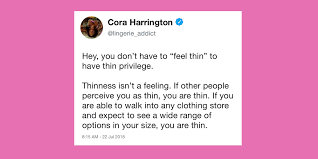
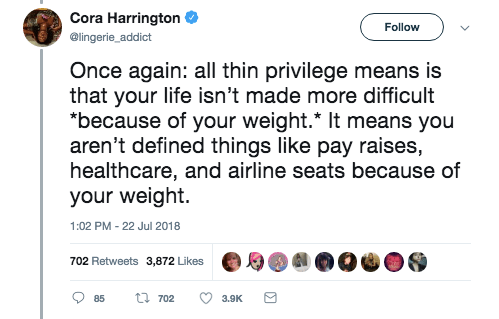
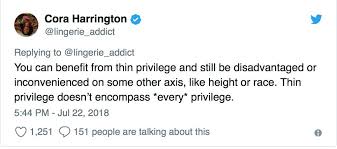
Viral tweet by Cora Harrington
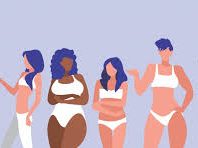
In todays society when we look at the beauty world and take a look at all of the models, influencers, famous actresses, and so on, the majority of the time these women are thin. When we see all of this it has become something normalized as we are taught that this is what women bodies should look like. So as women who may not be in that size rage it can have a very large impact as they are rarely seen as the “idol body”. When companies choose the women that they want to represent them they usually aim towards women with thinner bodies. In clothing brands magazine we usually see thin women model all of their clothes, and then at the end maybe have a dedicated area for plus-size women, which usually does not have as many options. Being thin allows you to move through life without facing the fear of attending school or posting a picture, and having someone to tell you to lose weight. As you go into store it is easier for women who are thin to find clothes that fit them well making it easier for them to shop. Another aspect of thin privilege could be seen on dating apps or even in porn we see that thin bodies are seen as more sexual. We rarely encounter a “plus-size” woman being seen as sexual. Many men speak out on their attraction to thinner bodies. It is important to tell everyone that they are beautiful when given the chance, we should not idolize a certain body type as it can have detrimental affects on people’s self-esteem. Privilege is a difficult topic to talk about, but it is important to acknowledge that thin privilege is real.
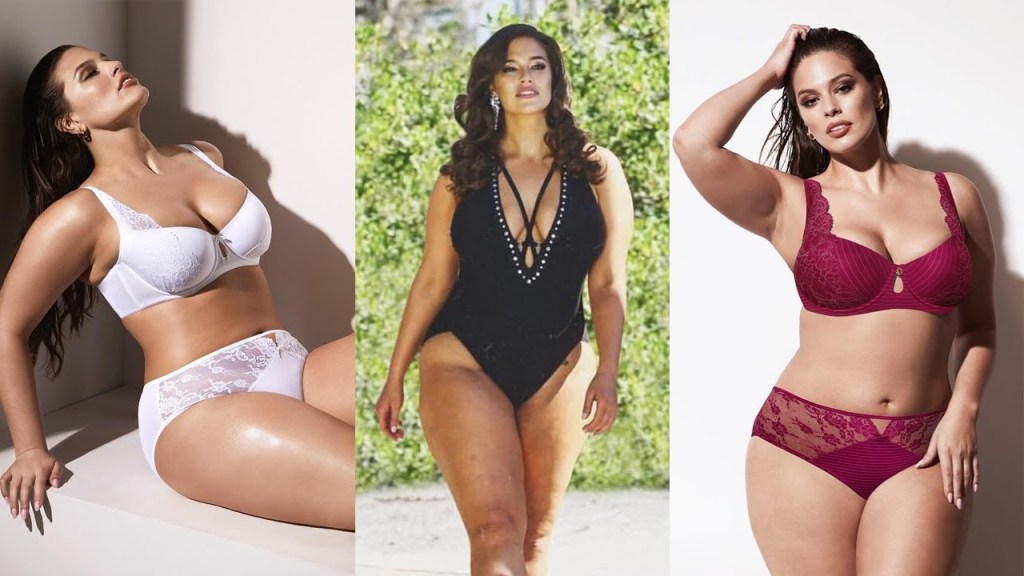
The Perfect Plus-Size
When looking at some of the plus-size models, it is evident that many of them are not truly representative to the plus-size community. It is important to recognize that although this is a big step in moving towards the goal of body inclusivity, it is not 100% there yet. Here we see multiple images, of the famous plus-size model Ashley Graham. It is without a doubt that she is beautiful and is considered plus-size but her curves and smaller waist and tummy, is not truly representative of many plus-size models. This also brings into the conversation the topic of people changing their bodies to become curvy, but only in the certain places such as their boobs, butts, and thights. When thinking of plus-size models, Ashley Graham is probably one of the only ones that you can name. If you were asked to name other famous models you could probably name more. It is important to point out that there are more plus-size models, such as Olivia Campbell, Bishamber Das, Naomi Shimada and so on. The term plus-size model in itself is not necessary. Why is it that the thin “normal” sized models are called models, but anyone above a size 12 is plus-size?
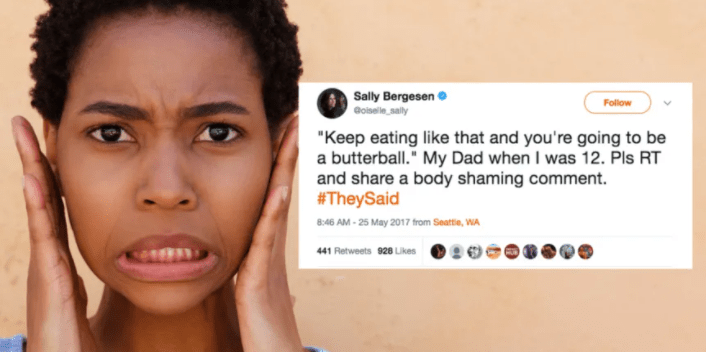
STOP FAT SHAMING
Fat shaming: humiliating or criticizing someone for being overweight or gaining weight
Throughout my life I have heard many comments from parents, friends, adults, kids, even on social media of people fat shaming others. Yes, I have witnessed my friend’s mom call her fat. It is actually the most disturbing thing ever. We are all entitled to our own opinions but it is never right to judge someone based on their body, or anything else really. We see that parents fat shaming their children, could lead to a lot of different issues with the child’s self-esteem and could lead to serious health issues. But as I have mentioned, people of all ages have began fat shaming others and associated fat as something negative. As we scroll through social media, we are bombarded with “fit teas”, “keto diets”, and “waist-trainer” advertisements. We see people comment on other people’s pictures nasty comments regarding their body. We live in a society where fat is seen as bad. Something that many people have commented that is damaging to their self esteem is when thin people call themselves fat when they are bloated or are not feeling their most confident. I think it is very important to keep in mind what you say as that could be offensive to others. We must change the stigma towards fat, and of course promote a healthy lifestyle, but fat shaming is never the answer.
Author: Katherine Cardona
 Body Image Through Media